


Enterprise
Network Switches
Build faster, smarter & more reliable networks. Enterprise switching solutions designed to deliver secure connectivity, intelligent network management, and scalable infrastructure.

Layer 3 Routing
Enterprise Grade
High-Speed Uplinks
Fiber Optic Ready
Leading Networking Technologies
24×7
Network Support
10GbE+
Multi-Gigabit Ready
PoE+
Infrastructure Ready
0
% Enterprise Scalable
Enterprise Switching Categories
From plug-and-play access ports to high-throughput data center cores, discover the exact network topology required to keep your business connected.
Managed Switches
Centralized control, VLANs, monitoring, and advanced network management for optimizing traffic and securing enterprise LANs.
Unmanaged Switches
Simple, cost-effective plug-and-play connectivity for basic network environments and small office expansions without complex setup.
L2 / L3 Routing
Advanced enterprise networks requiring internal routing, subnet segmentation, and scalable architectures spanning multiple departments.
PoE Switches
Power network-connected devices (IP Cameras, Access Points, VoIP phones) directly through the Ethernet cable, eliminating separate power supplies.
Explore PoE CapabilitiesData Center Switches
Ultra-high-performance switching for server racks, Top-of-Rack (ToR) deployments, and storage environments demanding massive throughput.
Explore DC SwitchesFiber & Uplink
High-speed connectivity using SFP/SFP+ fiber optics designed to link different building floors, campuses, and advanced distribution layers.
Explore Fiber UplinksWhich Switch Is Right For You?
Understanding the three-tier network model allows you to deploy the correct hardware at the correct location within your business.
Core Layer
The absolute backbone. High-speed, highly redundant data center switches responsible for moving massive amounts of traffic as quickly as possible without active packet manipulation.
Data Center Hubs
40G/100G Fiber Links
Distribution Layer
The intelligent middleman. Layer 3 switches that connect multiple access switches, handle VLAN routing, security policies, and aggregate traffic before sending it to the core.
Layer 3 Routing (IP)
Building/Floor Aggregation
Access Layer
The edge of the network. These switches connect directly to end-user devices (PCs, printers, cameras). Usually high-port density and often equipped with PoE capabilities.
PoE for Edge Devices
24/48-Port Density
Managed vs Unmanaged
Choosing the right level of administrative control for your network footprint.
Unmanaged Switch
Plug & Play
-
Zero Configuration
No interface or IP address. Devices communicate immediately upon connection.
-
Basic Security
No VLANs or access control lists. All connected devices are on the same broadcast domain.
-
No Remote Monitoring
Cannot be monitored via SNMP or cloud dashboards for troubleshooting.
-
Ideal Use Case
Small offices, adding extra ports to a desk, or isolated closed-circuit camera systems.
Managed Switch
Enterprise Control
-
Full Administration
Configure via Web GUI, CLI, or centralized cloud dashboards (e.g., Cisco Meraki).
-
VLANs & Security
Segment traffic (e.g., Guest vs Corp), enforce 802.1X, and prioritize traffic via QoS.
-
Proactive Monitoring
SNMP and Syslog integration allows IT teams to identify network bottlenecks instantly.
-
Ideal Use Case
Corporate LANs, Data Centers, multi-floor campuses, and secure IT infrastructure.
Featured Switching Deployments
Explore typical enterprise configurations designed to meet the extreme demands of modern data center and campus environments.
Enterprise Access Switch
Secure, intelligent, and scalable connectivity for employee workstations and office equipment. Features advanced Layer 2 management and robust security protocols.
Port Density
24 / 48 Port 1GbE
Uplinks
4x 10G SFP+
Management
Cloud / Local GUI
Security
VLAN & 802.1X

High-Density PoE+ Switch
Deliver both data and power through a single cable. Perfect for massive wireless deployments, IP surveillance networks, and smart building IoT devices.
Port Density
48 Port PoE+
Power Budget
Up to 740W
Ideal For
CCTV & Wi-Fi 6
Reliability
Redundant Power
Core Routing Data Center Switch
The heart of enterprise architecture. Delivering non-blocking, multi-terabit switching capacity for hyper-converged infrastructure, storage arrays, and server farms.
Port Speed
25GbE / 100GbE
Routing
Full Layer 3 (OSPF/BGP)
Interfaces
High-Density QSFP28
Availability
Hot-Swap Fans & Power

Design Your
Network
Define your basic connectivity requirements. Our network engineers will calculate PoE budgets, select the correct uplink architectures, and recommend the exact enterprise switch configurations to eliminate bottlenecks.
Switching Solutions for Every Environment
Reliable network backbones supporting the vital operations of diverse sectors.
Corporate Offices
Reliable LANs with secure VLANs for guest and employee access.
Surveillance
High-power PoE switching for massive IP camera deployments.
Education
Campus-wide coverage with high-density WAP integration.
Data Centers
Non-blocking 100G core switching for server farms.
Healthcare
Zero-downtime HA networks for critical medical devices.
Corporate Offices
Reliable LANs with secure VLANs for guest and employee access.
Surveillance
High-power PoE switching for massive IP camera deployments.
Education
Campus-wide coverage with high-density WAP integration.
Data Centers
Non-blocking 100G core switching for server farms.
Healthcare
Zero-downtime HA networks for critical medical devices.
Enterprise Switching FAQs
Common inquiries regarding network architecture, PoE capabilities, and deployment.
What is the difference between Managed and Unmanaged switches?
What is PoE and why do I need it?
What is a Layer 3 switch?
Do you provide network design and installation?
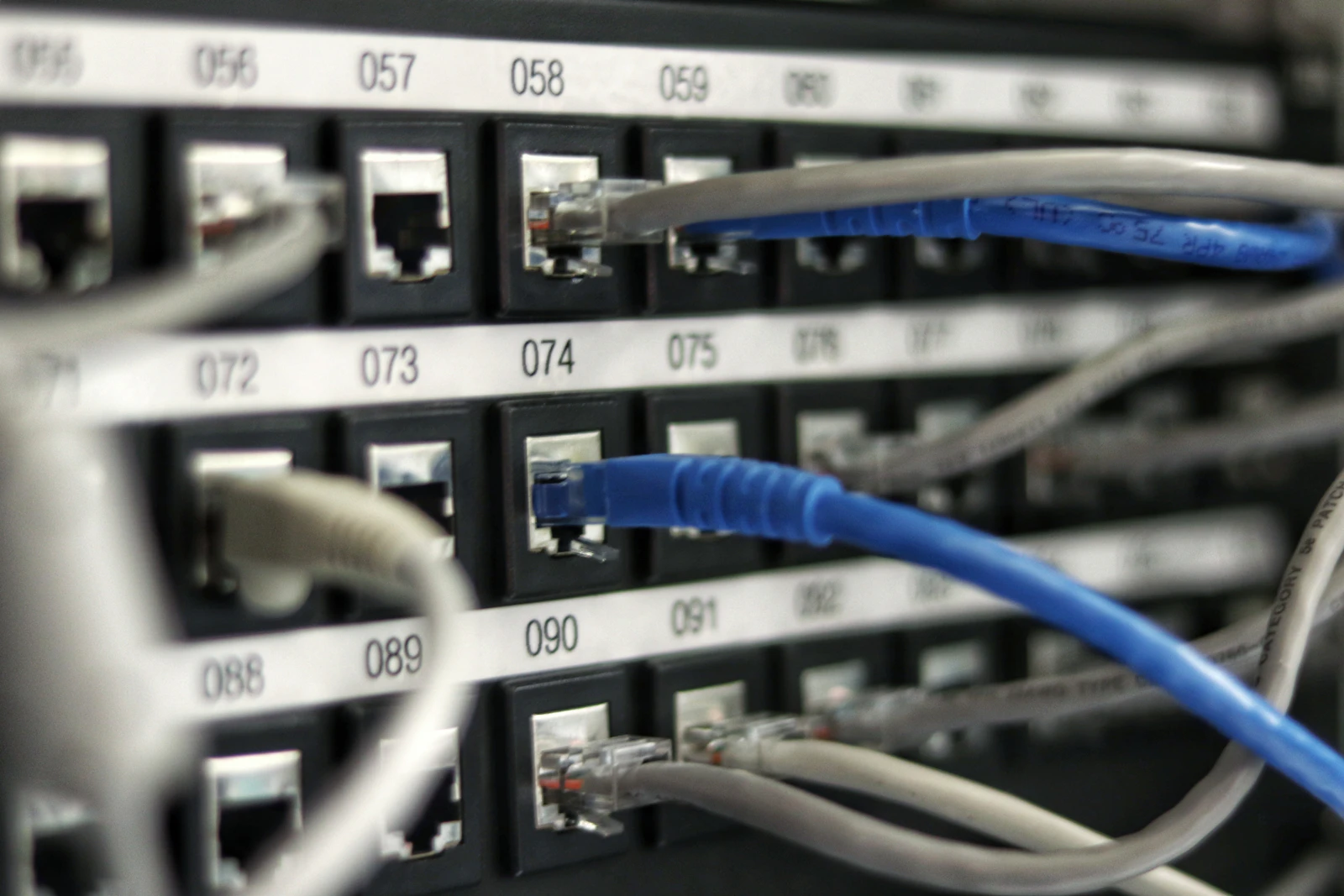
Build a Network That Keeps Your Business Connected
From small office networks to enterprise campuses and data centers, design a switching infrastructure built for performance, security, and future growth.